
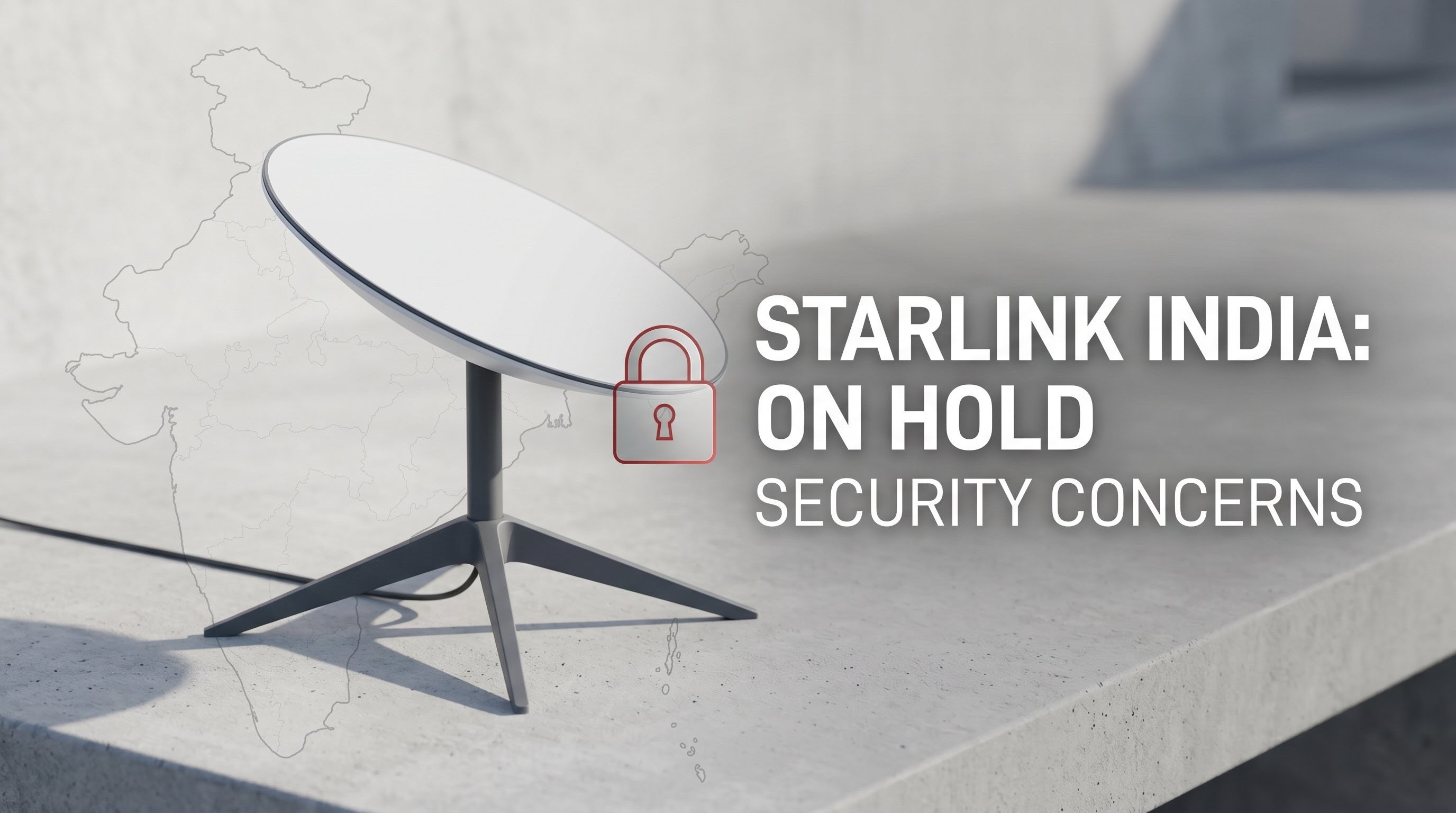
If you have been following the broadband and telecommunications space, you likely know that the race for satellite internet in India has been heating up. Elon Musk’s Starlink has been at the forefront of this revolution, promising to deliver high-speed, low-latency internet to the most remote corners of the country. For months, it seemed like the official rollout was just around the corner. However, recent developments suggest that users might have to wait a little longer.
According to recent reports, the Indian government has effectively paused the final approvals required for Starlink to begin its commercial operations. This delay isn't due to technical limitations or infrastructure issues; instead, it revolves around stringent national security concerns. Let's dive deep into what is causing this roadblock, how international geopolitical events are playing a role, and what this means for the future of satellite internet in the country.
The Root of the Delay: National Security and Geopolitical Tensions
At the heart of this delay is the Ministry of Home Affairs, which is reportedly withholding the final security clearances needed for Starlink’s launch. But why the sudden hesitation? The answer lies in the unique nature of satellite communications and recent global events.
Unlike traditional telecom operators that rely on physical cell towers and fiber-optic cables laid across the country, a satellite internet provider operates primarily from space. Starlink uses a massive constellation of low-Earth orbit (LEO) satellites to beam internet directly to user terminals on the ground. While this is fantastic for reaching underserved rural areas, it also means the infrastructure is largely outside the physical jurisdiction of the host country.
Reports indicate that Indian security agencies have grown cautious following the alleged use of Starlink terminals during recent geopolitical conflicts in the Middle East. What raised red flags was that these communication terminals were reportedly utilized in regions where the service was not even officially licensed to operate. This unauthorized usage in sensitive zones has prompted authorities to question the level of control they would have over a completely foreign-owned and operated communication network during times of crisis.
The primary concern is compliance. Officials are reportedly seeking concrete assurances and detailed operational plans from Starlink. They want to know exactly how the company will adhere to strict local security protocols, especially in hypothetical scenarios where demands from foreign governments might conflict with local regulations. Until these guarantees are ironed out, the green light remains out of reach.

Starlink’s Journey So Far
It is important to note that Starlink hasn't been sitting idle. The company has made significant strides in aligning with local regulatory frameworks over the past year. In fact, they successfully secured a Global Mobile Personal Communication by Satellite (GMPCS) license last year. This was a massive milestone that allowed the company to lay the groundwork for commercial operations and start forming local partnerships.
Furthermore, Starlink has already shown a willingness to comply with local laws. The company submitted affidavits agreeing to data localization requirements, ensuring that user data remains securely within the country's borders. On the infrastructure front, they have established around ten ground gateways across the region, including a primary central hub located in Mumbai. They even conducted security demonstrations for telecom authorities. Despite checking all these boxes, the final security nod remains the last, yet most challenging, hurdle.
Ripple Effects on the Broader Telecom Ecosystem
This pause isn't just a bump in the road for Elon Musk’s company; it is causing a ripple effect across the entire satellite communications sector. The delay in Starlink's clearance has reportedly stalled the broader satellite-spectrum pricing framework. The Department of Telecommunications had finalized a proposal for spectrum pricing—a crucial step for any commercial satellite internet rollout—but it has not yet moved forward for cabinet approval.
Meanwhile, domestic telecom giants are watching closely. Companies like Reliance Jio and Bharti Airtel are also gearing up to offer satellite internet services through partnerships with international providers. However, regulatory authorities reportedly view these domestic-international joint ventures as slightly less concerning from a security standpoint compared to a network that is entirely controlled by a single foreign entity.
What This Means for SpaceX's Global Ambitions
The timing of this regulatory roadblock is particularly critical for SpaceX, Starlink’s parent company. SpaceX is currently preparing for what could be a historic initial public offering (IPO), with market analysts projecting a valuation in the neighborhood of $1.75 trillion.
Starlink is a massive part of SpaceX's revenue growth strategy. With certain massive global markets completely inaccessible to foreign internet providers, this region stands as one of the world's largest and most lucrative untapped markets for broadband expansion. Securing a foothold here is vital for Starlink's global user base projections. A prolonged delay could present a significant challenge to their international expansion timeline.
The Road Ahead
So, where do we go from here? The ball is currently in Starlink's court. The company will need to work closely with security agencies to provide the necessary technological and legal assurances regarding network control and compliance.
For the everyday internet user, this means the wait for widely accessible satellite broadband continues. While the technology promises to bridge the digital divide and bring high-speed connectivity to rural areas, it is clear that national security will not be compromised for speed. As this regulatory dance continues, the tech world will be watching closely to see how—and when—satellite internet finally takes flight.
Subscribe to our YouTube channel for daily Android tips, tricks, and tutorials: TechyNoob




Discussion (0)
Post a Comment
No comments yet. Be the first to share your thoughts!