
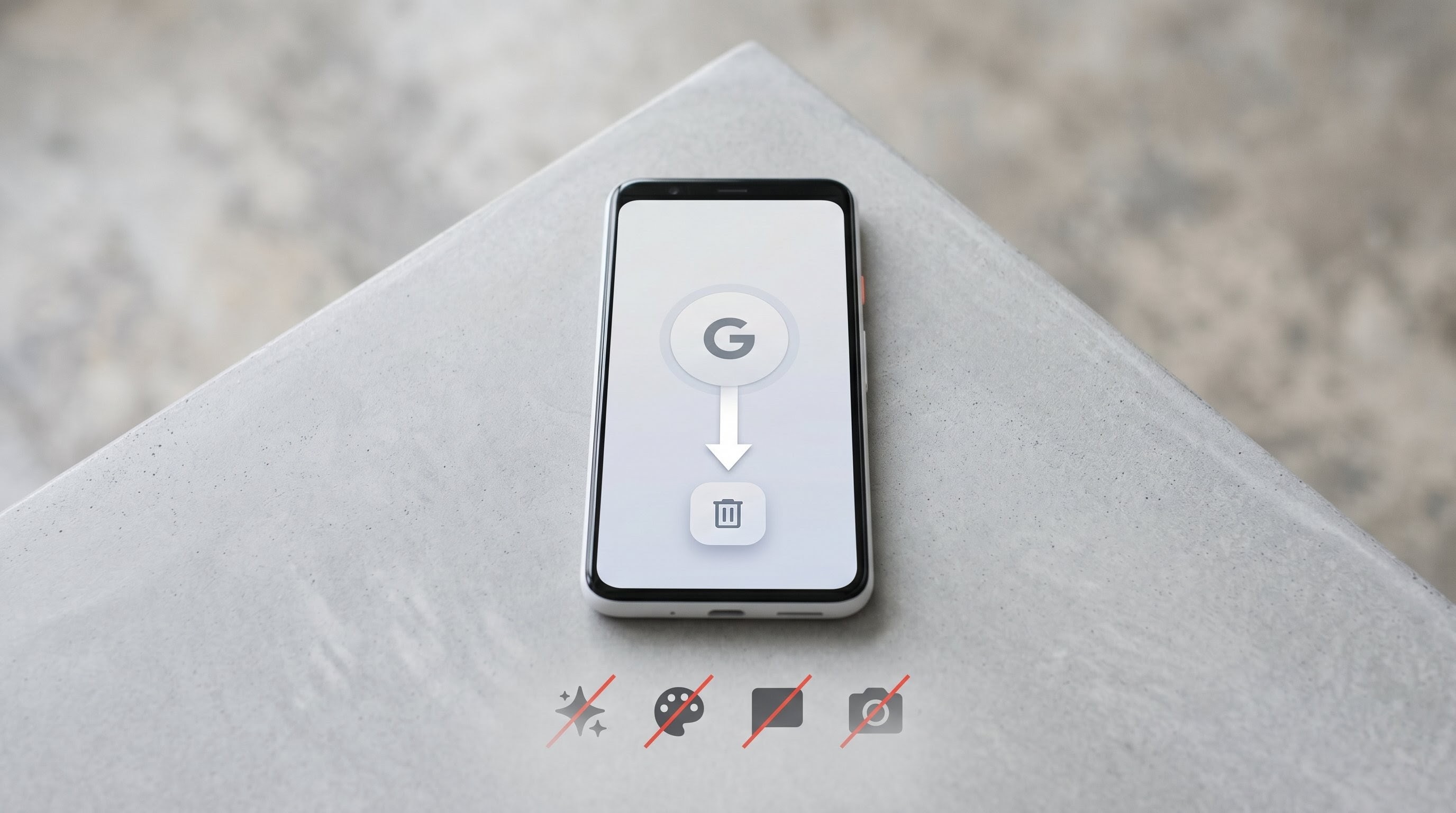
Welcome back to Techynoob! If you have been following the smartphone ecosystem for any length of time, you probably know the drill when it comes to Google. The company has a brilliant track record of building incredible hardware and pushing the boundaries of mobile technology. But there is another, slightly more frustrating track record that long-time users are all too familiar with: the notorious Google software graveyard.
Recently, another exclusive feature for Pixel owners quietly received its end-of-life notice. Google is officially retiring Pixel Studio, the dedicated AI image and sticker generator that made its grand debut alongside the Pixel 9 series back in 2024. While the loss of this specific application might not spark widespread outrage, the replacement strategy and the underlying strings attached are raising some serious questions about consumer trust and the true value of "exclusive" software features.
We believe in looking past the press releases to see how these changes actually impact everyday users. Let's break down exactly what is happening, why this transition matters, and what you need to know if you are currently using a Google Pixel device.
The Shift from Pixel Studio to Gemini
If you open Pixel Studio after the recent version 2.3 update, you will be greeted with a completely new prompt. The app is effectively shutting down its core generation features and redirecting users to create their images and animations inside the Gemini app instead. This transition is currently rolling out to users worldwide.
Google is framing this as a streamlining effort. The narrative is simple: one unified application, one central artificial intelligence surface, and a much cleaner user experience. Instead of juggling multiple apps for different AI tasks, everything is now housed under the Gemini umbrella using the Nano Banana framework. From an organizational standpoint, it makes perfect sense.
However, the transition prompt leaves out a crucial detail about what users are actually giving up in the process.

The Hidden Cost: From Unlimited to Capped
The biggest point of contention isn't the software interface—it is the pricing structure. Pixel Studio was a completely free tool. Users could generate as many AI images and stickers as they wanted without worrying about hitting a daily ceiling or paying a monthly subscription fee. It was a genuine perk of buying into the premium Pixel ecosystem.
The move to the Gemini app changes those rules. Free users will now hit a hard limit, which currently hovers around 20 AI image generations per day. For the average casual user, 20 images are likely more than enough. But for heavy users, creative professionals, or digital artists who relied on Pixel Studio’s unlimited generation capabilities, this is a distinct downgrade.
Once you hit that daily cap in Gemini, the upgrade path is suddenly very clear: you need to pay for a premium Google AI subscription plan. While this is not necessarily a bait-and-switch, it is a very deliberate nudge to move hardware owners into a recurring software subscription model. A feature that was once a free hardware perk has now become a funnel for a paid service.
Did Anyone Actually Love Pixel Studio?
Here is the irony of the situation: Pixel Studio was not a wildly popular application. If you check the Google Play Store, the app sits at a rather lackluster 3.2-star rating across roughly 2,600 reviews. Considering this software was pre-installed on millions of Pixel devices sold over the last couple of years, those engagement numbers are essentially a drop in the bucket.
Community discussions on platforms like Reddit echo this sentiment. Many users viewed Pixel Studio as a fun tech demo—something to play with during the first week of owning a new phone, only to abandon it shortly after. So, if nobody was using it, why is its removal causing friction?
The answer boils down to consumer trust. One vocal user recently left a one-star review explaining that they had purchased the Pixel 7, 8, and 9, but the sudden removal of a feature they genuinely loved has made them question whether they will ever buy another Pixel device. It is not just about losing an image generator; it is the realization that any feature marketed to sell the phone today could be unceremoniously killed off tomorrow.
The Expanding Google Graveyard
This situation highlights a systemic issue within the Google ecosystem. The "Google Graveyard" is a well-documented phenomenon. We have seen the company launch, push, and eventually bury beloved platforms like Inbox, Google Play Music, Google Podcasts, and Hangouts. Pixel Studio is just the newest headstone in an increasingly crowded cemetery.
Every time Google kills an app or alters the terms of an exclusive feature, it chips away at the core argument for buying a Pixel in the first place. You are never quite sure if the exclusive tools you rely on will be here next year.
How Does the Competition Compare?
It is worth noting that the grass isn't perfectly green on the other side either. Apple introduced its own AI image generator, Image Playground, with iOS 18, and the initial reception was exceptionally brutal. Users criticized the repetitive results, weak prompt understanding, and strict limitations to cartoon-only styles.
However, there is a fundamental difference in how the two tech giants handle their struggles. While Apple's first-party tool fell short, they actively worked to fix it by integrating robust third-party solutions like ChatGPT to improve the experience. Google, on the other hand, chose to kill its underperforming app entirely and replace it with a system that puts previous heavy users behind a paywall limit.
What You Should Do Now
If you are a Pixel owner who actually spent time creating artwork, stickers, or animations in Pixel Studio, your immediate priority should be saving your work. Head into the app and download everything from your Library directly to your device's local storage before the application goes completely dark.
Going forward, the Gemini app will be your new default whether you prefer it or not. For light, everyday usage, it will get the job done perfectly well.
At the end of the day, most of us will not actively mourn the loss of Pixel Studio itself. But the strategy behind its removal is something every smartphone buyer should keep in mind. When a company treats its exclusive software features as temporary experiments rather than permanent fixtures, it changes the value proposition of the hardware. As we look ahead to your next smartphone upgrade, it serves as a great reminder: always buy a device for the features it has today, not the promises of what it might do tomorrow.
Stay tuned to Techynoob for more updates, reviews, and deep dives into the ever-changing world of mobile technology!
Subscribe to my Youtube channel for daily android tips tricks and tutorials: TechyNoob

Discussion (0)
Post a Comment
No comments yet. Be the first to share your thoughts!